Cars
Jipinfeiche 2026: The Chinese Name for Need for Speed, Racing Legacy, Car Culture, and Global Gaming Impact

What Does Jipinfeiche Mean? Translation and Cultural Significance
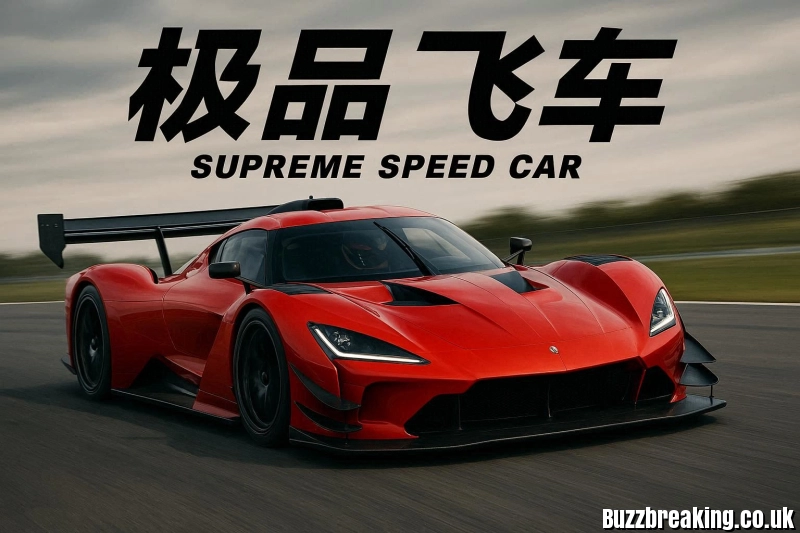
The term Jipinfeiche (极品飞车) is far more than just a literal translation of Need for Speed—it’s a phrase that captures the very essence of high-performance racing culture. Broken down, “Jipin” (极品) translates to top-tier, premium, or elite, while “Feiche” (飞车) means speeding car or flying vehicle. Together, the phrase evokes the imagery of cars moving so fast they almost defy gravity, a poetic yet powerful description that resonates deeply with gamers and car enthusiasts alike.
In China’s gaming ecosystem, Jipinfeiche has become synonymous with adrenaline, rebellion, and freedom. It represents more than gameplay—it symbolizes a lifestyle centered around speed, customization, and underground car culture. For many Chinese players who grew up in the late 1990s and early 2000s, this franchise was their first exposure to Western automotive culture, featuring brands like Ferrari, Lamborghini, and Nissan Skyline.
The name also carries emotional weight. Unlike direct translations that often lose meaning, Jipinfeiche amplifies the excitement of the original title. It speaks to the thrill of pushing limits, outrunning the law, and building a dream machine from scratch. In 2026, the term continues to trend across platforms like Bilibili and Weibo, where players use it not just to refer to the game, but as shorthand for anything fast, stylish, and elite.
Origins of Need for Speed and the Rise of Jipinfeiche in China
Jipinfeiche
The Need for Speed franchise, launched in 1994 by Electronic Arts (EA), started as a relatively realistic racing simulator. Early titles focused on licensed supercars and scenic tracks, offering players a taste of high-end automotive performance. However, the franchise truly exploded with the release of Need for Speed: Underground (2003), which introduced street racing, neon aesthetics, and deep customization.
In China, this era marked the birth of Jipinfeiche as a cultural phenomenon. The game spread rapidly through internet cafés and CD markets, becoming a staple for young gamers. Titles like Underground and Most Wanted were not just games—they were social experiences. Players gathered in LAN environments, competing, sharing tuning setups, and building reputations.
By the late 2000s, official localized versions began to appear, further cementing the franchise’s popularity. The Chinese gaming market embraced Jipinfeiche because it offered something unique: a blend of Western car culture with accessible, arcade-style gameplay. This combination made it appealing even to those with little prior interest in racing games.
Fast forward to 2026, and the franchise has evolved into a multi-platform powerhouse. With mobile titles, live-service updates, and massive open worlds, Jipinfeiche continues to dominate the racing genre in China and beyond.
Evolution of Jipinfeiche: From Classic Racing to Open-World Experiences
Over the decades, Jipinfeiche has undergone a dramatic transformation, adapting to changing gaming trends and player expectations. The early games focused on closed-track racing and realism, but the introduction of open-world gameplay redefined the series.
The Underground era (2003–2008) brought urban environments, illegal races, and customization to the forefront. This period is often considered the golden age, as it introduced features like vinyl wraps, body kits, and performance tuning. Players could finally express individuality through their vehicles.
In the modern era, the franchise embraced open-world maps and narrative-driven gameplay. Titles like Need for Speed: Heat and Unbound added day-night cycles, dynamic weather, and heat systems, where police intensity increased based on player actions.
By 2026, the focus has shifted even further toward massive, persistent worlds and mobile accessibility. Games like Jipinfeiche: Jijie (极品飞车:集结) offer expansive maps, social hubs, and continuous updates. Players can explore, race, and interact in real time, blurring the line between single-player and multiplayer experiences.
This evolution reflects a broader trend in gaming: moving from isolated gameplay to connected ecosystems where players create, share, and compete continuously.
Key Jipinfeiche Titles and Must-Play Games in 2026
The Jipinfeiche franchise boasts a long list of iconic titles, each contributing to its legacy. Some of the most influential include:
Classic Titles That Defined the Franchise
- Need for Speed: Underground (地下车会) – Introduced street racing culture
- Most Wanted (最高通缉) – Famous for intense police chases
- Carbon (卡本峡谷) – Added crew-based racing mechanics
Modern Fan Favorites
- Need for Speed: Heat – Day/night risk-reward system
- Need for Speed: Unbound – Stylized visuals and storytelling
2026 Standout: Jipinfeiche: Jijie
This latest installment is a mobile-first open-world racing game featuring:
- Hundreds of licensed vehicles
- Massive exploration zones
- Real-time multiplayer events
What makes Jijie unique is its ability to deliver console-quality experiences on mobile devices, making it accessible to millions of players worldwide.
Gameplay Mechanics: Speed, Strategy, and Skill
At its core, Jipinfeiche thrives on fast-paced, skill-based gameplay. Players engage in various race types, including circuit races, sprints, and drift challenges. The addition of nitro boosts and precision drifting mechanics creates a balance between arcade fun and technical mastery.
One of the standout features is the police pursuit system. As players win races and gain notoriety, law enforcement becomes more aggressive, introducing high-stakes chases that require quick thinking and map awareness. This mechanic adds tension and unpredictability, keeping gameplay fresh.
In 2026, newer titles incorporate AI-driven opponents and adaptive difficulty, ensuring that both beginners and experienced players remain engaged. The integration of user-generated content (UGC) also allows players to design custom tracks and challenges, expanding replayability significantly.
Car Customization: The Heart of Jipinfeiche Culture
If there’s one feature that defines Jipinfeiche, it’s deep car customization. Players can transform ordinary vehicles into unique masterpieces through both performance upgrades and visual enhancements.
Performance tuning includes:
- Engine swaps and turbo upgrades
- Suspension adjustments for handling
- Brake and tire improvements
Visual customization is equally extensive, offering:
- Custom paint jobs and vinyl wraps
- Widebody kits and spoilers
- Neon underglow and wheel designs
This level of personalization has influenced real-world car culture. Many enthusiasts credit Jipinfeiche for sparking their interest in tuning and automotive design. In 2026, the customization system is more advanced than ever, with dynamic lighting effects and AI-assisted design tools.
Cultural Impact: How Jipinfeiche Shaped Global Car Enthusiasm
Jipinfeiche’s influence extends far beyond gaming. It has played a major role in popularizing street racing aesthetics and tuner culture, especially in Asia. The franchise introduced players to iconic cars like the Toyota Supra, Mitsubishi Lancer Evolution, and Subaru Impreza WRX.
In China, it helped build a community of car enthusiasts who share modifications, attend meetups, and even pursue careers in automotive design. Online platforms are filled with fan-made content, tutorials, and racing highlights, showcasing the game’s lasting impact.
The series has also contributed to the rise of racing esports, with tournaments attracting global audiences. These events highlight the competitive side of Jipinfeiche, where skill and strategy determine the best drivers.
Jipinfeiche Mobile in 2026: Open World and Social Gaming
The biggest shift in 2026 is the dominance of mobile gaming. Jipinfeiche: Jijie leads this trend by offering:
- Seamless open-world exploration
- Social hubs for player interaction
- Voice chat and crew systems
Players can attend virtual car meets, compete in live events, and collaborate on challenges. The game’s live-service model ensures regular updates, including new cars, maps, and seasonal content.
This approach keeps the experience fresh and encourages long-term engagement, making it one of the most played racing games globally.
Jipinfeiche vs Other Racing Games
When compared to competitors like Forza Horizon or Gran Turismo, Jipinfeiche stands out for its arcade-style accessibility and emphasis on customization.
| Feature | Jipinfeiche | Forza Horizon | Gran Turismo |
|---|---|---|---|
| Gameplay Style | Arcade + Simulation | Arcade | Simulation |
| Customization | Extensive | Moderate | Limited |
| Open World | Yes | Yes | No |
| Mobile Access | Strong | Limited | None |
This balance between fun and realism makes Jipinfeiche appealing to a wider audience.
Future Outlook: What’s Next for Jipinfeiche?
Looking ahead, the franchise shows no signs of slowing down. Developers are exploring VR integration, AI-driven gameplay, and metaverse-style experiences. Future updates may include electric vehicles, sustainability themes, and cross-platform ecosystems.
The goal is clear: to create a fully immersive racing universe where players can live out their automotive fantasies. With continuous innovation and a loyal fanbase, Jipinfeiche is set to remain a dominant force in the gaming world.
Conclusion: Why Jipinfeiche Remains a Racing Icon in 2026
In 2026, Jipinfeiche (极品飞车) stands as a symbol of speed, creativity, and cultural influence. From its humble beginnings as a racing simulator to its current status as a global phenomenon, the franchise has consistently pushed boundaries.
Its combination of high-speed action, deep customization, and community-driven gameplay ensures its relevance in an ever-changing industry. Whether you’re a veteran player or a newcomer, Jipinfeiche offers an გამოცდილ filled with excitement and endless possibilities.
FAQs
1. What does Jipinfeiche mean in English?
Jipinfeiche translates roughly to “Supreme Speed Car” or “Top-Grade Racing Car”, representing elite performance and high-speed excitement.
2. Is Jipinfeiche the same as Need for Speed?
Yes, Jipinfeiche is the official Chinese name for the Need for Speed franchise.
3. What is the latest Jipinfeiche game in 2026?
The most popular title is Jipinfeiche: Jijie, a mobile open-world racing game with social features and extensive customization.
4. Why is Jipinfeiche so popular in China?
Its mix of accessible gameplay, car customization, and underground racing culture resonates strongly with players.
5. Can you play Jipinfeiche on mobile devices?
Yes, modern versions like Jijie are designed for mobile, offering console-level graphics and gameplay.
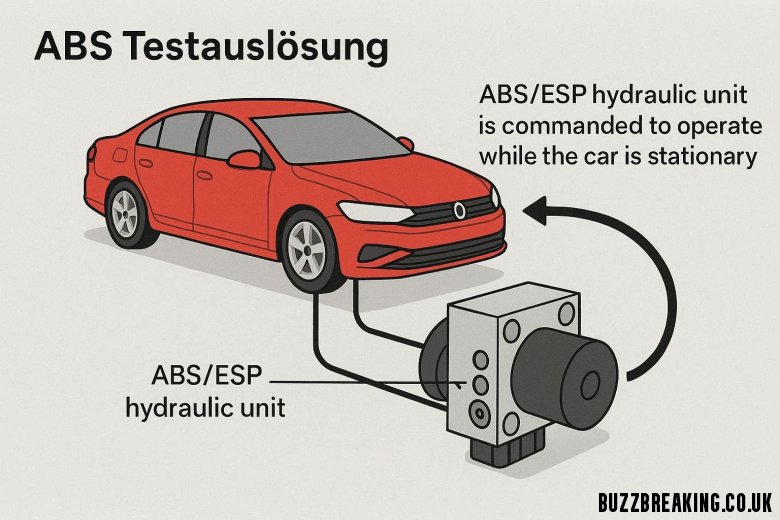
The ABS Testauslösung is one of the most important brake diagnostic procedures in 2026. It allows mechanics, inspection centers, and vehicle owners with professional scan tools to electronically trigger the Anti-lock Braking System (ABS) to test whether the pump, valves, sensors, and control module are working correctly.
Modern vehicles rely heavily on ABS and ESP systems for safe braking. If there is trapped air, a failing pump, or a sensor issue, braking performance can be reduced. That is why ABS Testauslösung is now standard practice in workshops, MOT/TÜV inspections, and advanced OBD diagnostics.
What Is ABS Testauslösung?
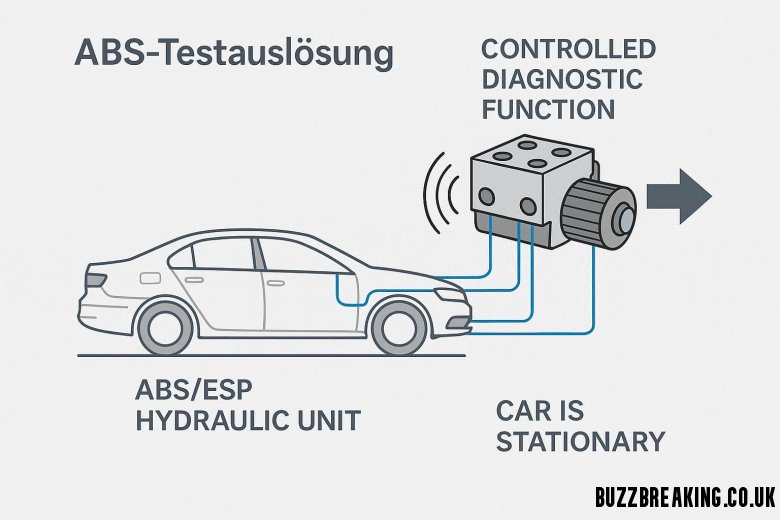
What Is ABS Testauslösung?
ABS Testauslösung is a controlled diagnostic function where the ABS/ESP hydraulic unit is commanded to operate while the car is stationary. The vehicle does not need to skid or brake hard during the procedure.
Main Components Checked During the Test
- Solenoid valves open and close correctly
- Return pump builds hydraulic pressure
- Wheel speed sensors provide valid signals
- Communication with the ABS control module is confirmed
In short, it is a self-test under load that the vehicle cannot fully perform during normal driving.
When Is ABS Testauslösung Needed?
This procedure is commonly used in several repair and inspection situations.
Typical 2026 Scenarios
- After replacing an ABS sensor, hydraulic block, or control unit
- Troubleshooting when the ABS warning light is on, but no permanent fault code appears
- During deeper inspections after MOT, TÜV, or roadworthiness concerns
- After brake bleeding when the pedal still feels soft
Important: Without activating the ABS system, air can remain trapped inside the ABS hydraulic block, causing poor pedal feel even after normal bleeding.
Requirements Before Starting the Test
Before performing ABS Testauslösung, several conditions must be met.
| Requirement | Why It Matters |
|---|---|
| Battery voltage above 12.4V | ABS pump may draw up to 40A |
| Ignition ON, engine OFF | Control module active without engine noise |
| Fault memory cleared | Stored faults can block activation |
| Vehicle secure / wheels free | Safe valve cycling during test |
| Diagnostic scanner connected | Required for modern systems |
Without a scan tool, a true ABS activation test is not possible on most modern vehicles.
ABS Testauslösung Step by Step
With tools like VCDS, ODIS, Bosch KTS, Gutmann, Carly, or advanced OBD scanners, the process is similar.
How to Perform It
- Select module 03 – Brake Electronics
- Open Output Tests or Basic Settings
- Choose ABS Pump / Test Activation
- Press and hold the brake pedal
- Pump runs for 2 to 10 seconds
- Valves click loudly during operation
- Recheck fault codes after completion
What Happens Inside the Car
- Return pump may build 120–180 bar pressure
- Inlet and outlet valves pulse individually
- ABS warning light may blink
- Brake pedal can vibrate or drop slightly
This behavior is normal during testing.
Common Problems & Faults
If the test fails or does not start, these are common causes.
Most Frequent Issues
- Low battery voltage → connect charger
- Active wheel speed sensor fault
- Brake pedal not pressed hard enough
- Air trapped in system causing noisy pump
- Blown fuse or relay issue
A common code is 01276 – ABS Hydraulic Pump. This may indicate a failed pump, relay, fuse, or wiring problem.
ABS Testauslösung vs ESP Test Activation
Many drivers confuse these two procedures.
| System | What It Tests |
|---|---|
| ABS Testauslösung | Wheel lock prevention, pump, valves |
| ESP Test Activation | Plus steering angle, yaw sensor, selective braking |
On newer systems such as ESP 9.0 and above, both tests are often combined into one routine lasting 30 to 60 seconds.
Can You Perform ABS Testauslösung Yourself?
Yes — but only with the correct hardware.
Popular 2026 Options
- VCDS
- OBDeleven
- Carly
- Bosch KTS / Hella Gutmann professional systems
Many cheap Bluetooth apps only read codes and cannot run output tests.
Warning: Brake system work affects safety. After any test, always perform a road test and brake check at low speed.
ABS Testauslösung After Brake Bleeding
After replacing brake hoses, master cylinders, or lines, air often stays trapped inside the ABS unit.
Correct Method
- Bleed all four calipers normally
- Run ABS Testauslösung
- Air moves into brake lines
- Bleed brakes again
- Repeat until pedal feels firm
This saves time compared with endless manual pumping.
Legal & Inspection Rules in 2026
During annual inspections, the ABS warning light is a mandatory check.
- Light stays on after startup = major defect
- Active ABS testing is usually not part of basic inspection
- If braking behavior seems abnormal, workshop diagnostics may be required
A working ABS system remains essential for passing inspections.
Final Verdict
The ABS Testauslösung is one of the most valuable brake diagnostic tools in 2026. It helps verify pumps, valves, sensors, and system pressure in less than one minute. It is especially useful after repairs or brake bleeding where hidden air or weak components can create dangerous braking problems.